October 2nd: On October 2nd, 1925, British inventor Baird invented television
@hampoecstacy
John Lodge Baird was a British electrical engineer and pioneer in the development of television. He was born into the family of a pastor in Helens Burg, Scotland, and has shown the genius of an inventor since childhood. Baird studied at the University of Glasgow and the Royal College of Technology. During World War I, Baird stated that he was not suitable for military service and became the head of a large power company.
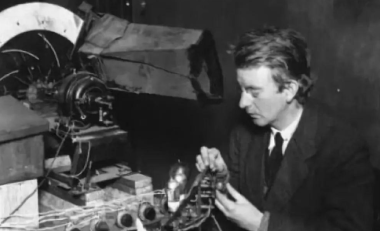
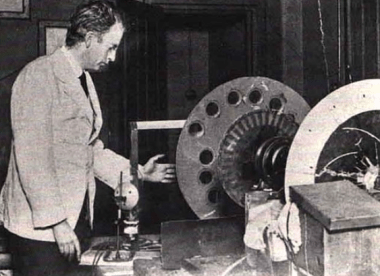
In 1924, Baird conducted a series of experiments to transmit images using collected old radio equipment, neon tubes, scanning discs, electric heating rods, and magnetic wave lamps and photocells that could generate electricity intermittently. However, these test materials are so old that every time they are tested, some parts need to be damaged and updated.
After hundreds of experiments, Baird summarized a lot of experiences. On the morning of October 2, 1925, when Baird started the machine in the room again, as the motor speed increased, he finally clearly received Bill, the face of a performance doll, from the image receiver in another room.
Baird was extremely excited, and his dream of inventing "television" for many years came true. Although perfection is not yet possible, it was a successful experiment. Subsequently, Baird convinced wealthy company owner Gordon Selfridge to provide him with sponsorship and focus more on researching television. On January 27, 1926, the machine invented by Baird made significant improvements. He immediately wrote a letter to the British Society for the Popularization of Science, requesting that it observe on site. When Baird teleported Bill's face and others' faces from one room to another, the invited experts unanimously agreed that this was an incredibly great invention. The sponsors quickly realized that the market prospects for this invention were broad, so they invested and established several companies.
In the spring of 1928, Baird developed a color stereoscopic television and successfully transmitted images to the other side of the Atlantic, becoming a prelude to satellite television. A month later, he transmitted the radio waves to the Berenkari cruise ship, causing all the passengers to be very excited and surprised. During this period, Baird was truly proud, and compared to several other inventors of the same era who were also inventing television, his technology stood out and surpassed other inventors.
However, the good times did not last long. In 1936, Baird encountered a powerful competitor - the Electrical and Musical Instrument Industry Company - who invented a fully electronic television system. After a period of comparison, experts concluded in February 1937 that Baird's mechanical scanning system was not as good as the full electronic system of the Electrical and Musical Instrument Industry Company. Baird had to find another market. However, just as he wanted to further study the new color system, he suddenly contracted pneumonia and unfortunately passed away in 1946
Nowadays, Baird's invention of television has developed to an astonishing extent. Clear and vivid television has become a necessity in real life. In 1962, communication satellites were sent into space orbit, and communication between continents was no longer difficult.
People sitting at home can know what is happening in every corner of the world, and the distance between people in space and time has been shortened. All of this is thanks to Baird's invention.


 Guarded Ecstasy
You must be logged in to post a comment.